草榴社区

Updated
|
Securing Your School
With the rise of school shootings and other violent incidents, it is essential to have a comprehensive plan in place to protect everyone on your school campus.

Ensuring the safety and security of students and faculty members in schools is a top priority for educators, parents, and community members alike. With the rise of school shootings and other violent incidents, it is essential to have a comprehensive plan in place to protect everyone on your school campus. In this article, we will comprehensively analyze the key factors that impact school security, including planning by a professional security firm, cost, how to implement recommendations, buy-in from stakeholders, and the importance of considering the impact on students and staff when making decisions.

Hire a professional security firm.

Planning by a professional security firm is a critical component of school security. These firms have the expertise and experience to identify potential risks and develop effective mitigation strategies. In addition, they can thoroughly assess the school's physical environment, including the building layout, access points, and existing security measures. Your board andThis information can then develop a customized security plan that addresses the unique needs of the school. However, the cost of hiring a professional security firm can be a significant barrier for many schools. The expenses associated with a comprehensive security plan can be substantial, and the school must weigh the benefits of increased security against the financial constraints of the budget. This tradeoff can be challenging, but ensuring that the school is adequately protected is vital while being mindful of the available financial resources.

Effective implementation is vital.

Implementing the recommendations made by a security firm

. . .read more

Overview of State Voucher Programs in the United States

Updated
|
Overview of State Voucher Programs in the United States
More than twelve states and the District of Columbia have education voucher programs. We describe the various programs and offer suggestions on how to use them so your child can attend private school.

Voucher programs have become a subject of significant interest in education policy, with almost a quarter of states implementing such programs. These initiatives aim to give parents more educational choices for their children, allowing them to use public funds to enroll their children in private or parochial schools.

This article overviews voucher programs in thirteen states鈥擜rizona, Colorado, D.C., Florida, Georgia, Indiana, Louisiana, Maine, Ohio, Oklahoma, Utah, Vermont, and Wisconsin. In addition, it highlights the year each program became law and provides a brief description of each state's voucher program.

Arizona (1997)

Arizona's voucher program, the Empowerment Scholarship Accounts (ESA), was established in 1997. Initially limited to students with disabilities, the program has expanded to include other eligible student populations, such as children from military families and those attending low-performing schools. ESA provides parents with public funds through education savings accounts for various educational expenses, including tuition, textbooks, and tutoring services.

Colorado (2003)

Colorado's voucher program, the School Choice Grant Program, was enacted in 2003. The program aims to provide educational options for students from low-income families attending low-performing schools. Qualified students receive tuition grants at private schools participating in the program.

District of Columbia (2003)

The District of Columbia Opportunity Scholarship Program (OSP) was established in 2003. It is the only federally funded voucher program in the United States. The OSP offers scholarships to low-income families residing in the District of Columbia, enabling them to enroll their children in participating private schools.

Florida (1999)

Florida's voucher program,

. . .read more

5 Most Important Soft Skills to Have on Your Resume

Updated
|
5 Most Important Soft Skills to Have on Your Resume
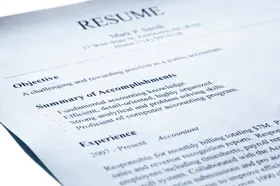
Want to be a private school teacher? Highlight your soft skills as well as technical skills in your resume.

When you apply for a teaching position, the technical and soft skills you offer are high on the list of prerequisites. We'll cover technical skills in another article. But first, look at soft skills and learn why they are the backdrop against which you will be assessed both as a teacher and an individual. identifies you as a candidate who will be a good fit in the classroom and the larger school community.

The importance of soft skills

Soft skills are crucial in an interview because they are the traits that can set you apart from others with similar technical abilities. After all, you will not be the only applicant for the position you have applied for. Your soft skills can and should drive you to the top of the list. Why? Because schools want to know that a potential teacher has the following soft skills:

  1. work well with others
  2. communicate effectively
  3. adapt to new situations

Soft skills like problem-solving, teamwork, and leadership can make you stand out in an interview. These skills can also demonstrate your ability to handle stress, work under pressure, and think critically. In many cases, your soft skills can be just as essential as your technical skills regarding hiring decisions. That's why it's always a good idea to focus on developing your soft skills alongside your technical abilities.

What are soft skills?

Soft skills are those personal attributes, habits, and social behaviors

. . .read more

Examining the Current State of Vouchers in Arizona

Updated
|
Examining the Current State of Vouchers in Arizona
This comprehensive article explores the current state of voucher programs in Arizona, examining the relevant state laws, pros and cons, and their impact on education. Gain authoritative insights into the Empowerment Scholarship Accounts (ESA) program, equity concerns, and the ongoing debate surrounding educational choice in Arizona.

The utilization of vouchers in education has been a subject of ongoing debate in various states, and Arizona is no exception. Vouchers, also known as school choice programs, provide public funds that parents can use to cover tuition expenses at private schools. In this article, we will delve into Arizona's current state of vouchers, exploring relevant state laws and evaluating the pros and cons of this contentious issue. However, before we delve into Arizona's voucher program, here is a look at the beginnings of voucher programs.

How voucher programs got their start.

Voucher programs have their roots in the mid-20th century. Economists and politicians initially promoted vouchers for educational choices and alternatives to traditional public schools. The concept of vouchers gained traction as a response to concerns about the quality of education, particularly in disadvantaged communities.

Here is a brief overview of the historical context and reasons behind the emergence of voucher programs:

Milton Friedman and the School Choice Movement

The intellectual foundation of voucher programs can be traced back to economist Milton Friedman, who popularized the idea in his seminal 1955 essay ".

Friedman argued for a system where government funding would follow students, enabling parents to choose the educational institutions that best meet their children's needs, including public and private schools.

Civil Rights Movement and Desegregation

During the Civil Rights Movement in the 1950s and 1960s, there was a push for desegregation and equal access to

. . .read more

The Value of STEM Programs

Updated
|
The Value of STEM Programs
The STEM subjects are now taught across curricula and integrated into the teaching of every subject at every grade level. More about STEM here.

I've often wondered how my education would have turned out if computers and STEM had been part of the course offerings in the 50s and 60s. Of course, engineering is part of my DNA, with my father, uncles, grandfather, and great-uncles all having been chemical, mechanical, or civil engineers. Music and Latin were the subjects that interested me as a high school student. Fast forward to 1980. When IBM introduced the PC in 1980, I was awestruck. Then came the DARPA project called the Internet. I never looked back. I devoured technology and all its manifestations with an enthusiasm I had never experienced before. Against that personal backdrop, in this essay, I aim to see how I would integrate STEM subjects (Science, Technology, Engineering, and Mathematics) into my grandchildren's educations.

Why is a STEM education important?

An education in STEM (Science, Technology, Engineering, and Mathematics) is important for several reasons: , and your students will be well-equipped to handle the career challenges of today's work environment.

It provides career opportunities

The workplace is changing rapidly. Education in STEM subjects can provide students with the skills and knowledge they need to pursue careers in fields that are in demand.

STEM extends far beyond the classroom. There are many places where STEM shows up in the real world, and many students already unknowingly engage with it in their day-to-day routines. Highlighting how everyday experiences can relate to their STEM education is another way of

. . .read more

Recent Articles

Project Based Learning in 草榴社区 Schools Guide
Explore project-based learning in private schools, outcomes, assessment methods, and what parents should expect in 2026.
AI Data Privacy Policies in Independent Schools
Learn how independent schools manage AI data privacy, key policies, risks, and what parents should look for in 2026.
草榴社区 School Governance Structures Explained
Learn how private school governance structures, board roles, and transparency shape school quality and accountability.