草榴社区

Updated
|
Which Schools Did Our Presidents Attend? Part 3 - Wilson to Trump
Depending on their family circumstances, our Presidents received a wide range of primary and secondary schooling.

It was a different world for the Presidents who held office in the 20th century. They had a succession of wars to deal with, as well as two devastating economic recessions.

28 - Woodrow Wilson

President from March 4, 1913, to March 4, 1921.
Born: December 28, 1856, Staunton, Virginia
Died: February 3, 1924, Washington, DC
Political party: Democratic Party

Virginia native Woodrow Wilson did not attend school until he was a teenager. He was homeschooled. Scholars seem to think he might have had dyslexia. Wilson compensated for this by learning Graham Shorthand. He did manage to attend college, variously attending Davidson College, Princeton University, and the University of Virginia Law School.

29 - Warren Harding

President from March 4, 1921, to August 2, 1923
Born: November 2, 1865, Blooming Grove, Ohio
Died: August 2, 1923, San Francisco, California
Political Party: Republican Party

Little is known of Ohio native Warren Harding's early education. Scholars seem to think that he was mostly homeschooled. He attended Ohio Central College and earned his degree from that institution.

30 - Calvin Coolidge

President from August 2, 1923, to March 4, 1929
Born: July 4, 1872, Plymouth Notch, Vermont
Died: January 5, 1933, Northampton, Massachusetts
Political Party: Republican Party

Vermont native Calvin Coolidge attended Black River Academy and then St. Johnsbury Academy, local semi-private schools which eventually became their town's public schools. He matriculated to Amherst College from
. . .read more

Which Schools Did Our First Presidents Attend? Part 1 - Washington to Lincoln

Updated
|
Which Schools Did Our First Presidents Attend? Part 1 - Washington to Lincoln
A fascinating look at where our first Presidents went to school.

Not many schools existed in in our young nation. The dearth of schools makes you wonder what forces shaped the philosophies and thinking of the men who became our first sixteen presidents. In the 18th and early 19th-centuries, formal education usually took place in a small, intimate setting in the home of a minister. Lessons included what we now call core subjects, i.e., reading, writing, and mathematics. Teachers also taught the and classical languages.

In pre-Revolution days, occasionally young men were sent off to England to study in boarding or public schools there. Many of these early presidents matriculated to colleges such as , , , and the , back in the days when these institutions were just becoming established. Politics, agriculture, law, and the armed services figure prominently in the career paths of these distinguished men in many cases. Other presidents came to the job with very little formal education. What follows are snapshots of these remarkable leaders.

1 - George Washington

President from April 30, 1789 to March 4, 1797. No party affiliation.
Born: February 22, 1732, Westmoreland County, Virginia
Died: December 14, 1799, Mount Vernon, Virginia

Our first President, George Washington, was homeschooled and self-taught. His formal education consisted of lessons in mathematics, reading, and writing. Scholars seem to think that George attended classes with

. . .read more

Applications 101

Updated
|
Applications 101
Admission to a private school can be a complex and overwhelming process for parents, especially if they are new to it. This article serves as a comprehensive guide, compiling all the necessary information and resources to navigate the private school admissions process. It covers various topics, including an overview of the process, challenges parents may face, technical aspects such as document submission and recommendations, tips for international students, common mistakes to avoid, and insights into the admissions process from the school's perspective. Additionally, it offers guidance on handling acceptance, rejection, and waitlisting outcomes.

Admission to a private school is a process with many components to it. Both the process and its many components can be confusing to parents dealing with private school admissions for the first time. So, I devised this article as a hub that includes all my articles describing the private school admissions process.

The Overview

Admissions to 草榴社区 School: A-Z puts all the information you need to navigate the private school admissions process in one convenient place. Whether you are just beginning or have been through this before, you will find help and advice to guide you.

Admissions 101 offers an overview of the private school admissions process and the steps needed to find the right private school for your child. Admissions Checklist will keep you on track as you work through the private school admissions process. Essentially it takes the points covered in the previous two articles and formats them into an easy-to-follow checklist.

5 Challenges To Getting Your Child Into 草榴社区 School

If you are good at organizing projects, the challenges involved in getting your child into private school will not seem especially daunting. Bear in mind that this project will stretch over eighteen months or more.

Play the Hand You Have Been Dealt

In this article, I am suggesting that you need to be objective as you decide which schools will be on your shortlist. Card games such as Bridge and Solitaire with multiple decks of cards fascinate me. I have learned

. . .read more

Outsourcing a Boarding Program: 2026 Guide for 草榴社区 Schools

Updated
|
Outsourcing a Boarding Program: 2026 Guide for 草榴社区 Schools
Learn how outsourcing a boarding program works in 2026, including costs, benefits, staffing, and trends for private day schools adding residential options.
Roanoke Catholic School

This article has been updated to reflect 2026 data and recent developments.

For private day schools seeking to expand their reach and diversify their student body, adding a boarding component has traditionally required significant capital, staffing, and operational expertise. In recent years, however, a growing number of schools have explored a different model, outsourcing residential life to specialized third-party providers.

This approach allows schools to offer a boarding experience without building and managing dormitories independently. The model has gained traction, particularly as international student mobility rebounds and families seek structured, high-quality residential environments.

This article examines how outsourced boarding programs work, why schools adopt them, and how costs and outcomes compare to traditional boarding schools.

What Is an Outsourced Boarding Program?

An outsourced boarding program is a partnership between a day school and an external organization that manages housing, student life, and residential services. The school maintains control over academics and admissions, while the partner organization operates the dormitory and supervises students outside the classroom.

This model is especially appealing to schools that want to:

  • Attract international students
  • Increase enrollment without expanding campus infrastructure
  • Provide a more consistent alternative to homestays
  • Enhance their academic profile through greater diversity

For families, the result is a hybrid experience, combining the academic environment of a day school with the structure and supervision of a boarding program.

Case Study: Wilson International鈥檚 Model

Wilson International represents one example of this approach. Founded to support private schools in expanding their residential offerings, the company provides housing,

. . .read more

A Look At An Athletic Academy

Updated
|
A Look At An Athletic Academy
Learn how modern sports academies balance rigorous academics, elite athletic development, NCAA preparation, and student support for aspiring athletes in 2026.

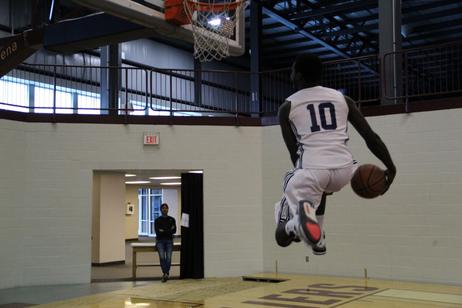
Editor's note: I recently asked Bobby Bossman, Director of SPIRE Academy, to explain and outline the kind of athletic programs and training the Academy offers. Specialized sports academies have expanded significantly over the past decade, giving young women and men the opportunity to pursue elite athletic development while maintaining college-preparatory academics. SPIRE Academy remains one of the leading examples of this model. ~Rob

For talented student-athletes, balancing academics and athletic development can be one of the greatest challenges of the high school years. SPIRE Academy was designed to address that challenge by combining flexible academic scheduling with individualized athletic training, sports performance programs, and college preparation.

Below, Bobby Bossman explains how the Academy approaches student-athlete development.

How Does a Specialty Institute Such as SPIRE Academy Handle the Balance of Academics and Athletic Training?

By having flexibility with each student's time and the ability to create custom daily schedules, our staff can plan the most appropriate training day unique to each student-athlete. Some athletes may require more or less time in academic training based on progress. We have the ability to accommodate accordingly by infusing more academic time when needed and allowing those who are ahead academically extra periods of athletic training.

This is versus the traditional high school setting that blocks students into a structured school day before athletic activities even begin.

SPIRE also has the ability to condense the academic portion of the day by removing some filler blocks such as study halls and physical education

. . .read more

Recent Articles

Ask Current Parents What Admissions Won't Answer
Learn how to ask current private school parents revealing questions about culture, academics, communication, costs, discipline, and community life before deciding whether a school truly fits your family well.
When School Anxiety Is Really a School Fit Problem
Learn when school anxiety may signal a poor school fit, how parents can identify academic or social mismatches, and when changing private schools deserves serious consideration for families today.
Will My Child Find Their People? Evaluating School Culture
Learn how to evaluate private school culture, student belonging, friendships, teacher relationships, social dynamics, and authentic community fit so your child can find the right place to thrive and connect.